
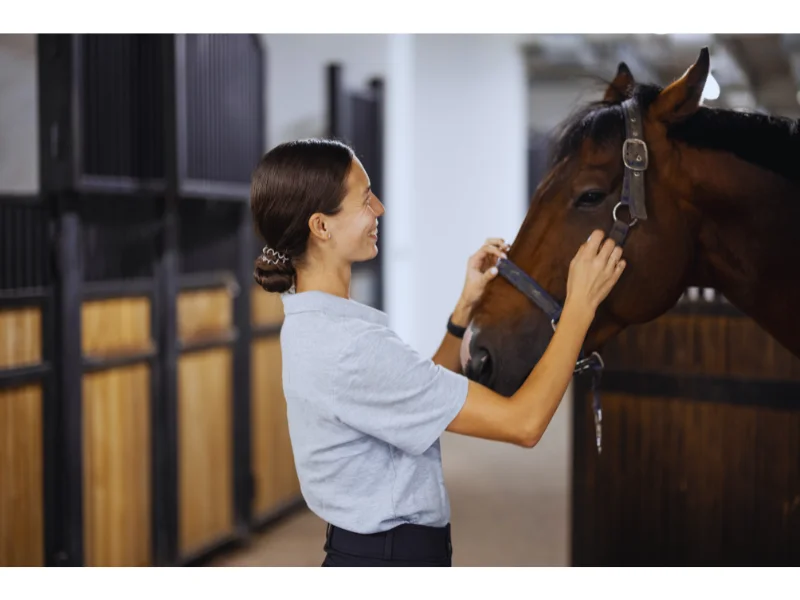
Unprocessed emotions can lead to long-term stress, anxiety, and even lead to physical health issues.
Stress, trauma, and past experiences create patterns that can feel impossible to change, no matter how much effort is made.
Talking about these emotions can help, but some feelings go deeper than words.
Equine coaching provides a powerful way to access these deeper emotions.
Interacting with horses can regulate the nervous system and lower stress levels, creating the right conditions for emotional breakthroughs.
These equine-assisted interactions bring emotions to the surface in ways that feel natural and unforced.
When the body relaxes and the mind quiets, understanding of one’s self and clarity begins to emerge.
How Emotional Breakthroughs in Equine Coaching Happen
Emotions shape how people experience the world.
In equine coaching, clients often come in carrying unresolved emotions, stress, or past trauma that affects their ability to grow.
Unlike traditional talk therapy, working with horses creates a nonverbal, experiential process where emotional breakthroughs can happen in a way that feels natural and unforced.
Horses have a unique ability to sense emotions and respond to them in the moment.
Their reactions provide immediate feedback, helping clients recognize and process deep emotions they may not even be aware of.
Facilitating emotional breakthroughs in equine coaching requires patience, awareness, and an understanding of how to guide clients through their emotions safely.
A study from Korea has shown that equine-assisted coaching supported the emotional regulation and stress levels of Korean workers.
When there is an environment of trust and safety, coaches can help clients experience profound emotional shifts that allow them to move past limiting beliefs and patterns.
Behind Emotional Breakthroughs in Equine Coaching
How Horses Support Emotional Processing
Horses are highly sensitive to human emotions and rely on nonverbal communication to interact with the world around them.
Research from Behavioural Processes suggests that horses can recognize human emotions through facial expressions and body language.
Because of this, they often reflect back emotions that a person may not have fully processed, making them valuable partners in emotional coaching.
This mirroring effect helps clients become more aware of their emotions and learn how to regulate them.
A person carrying grief, fear, or anxiety may notice the horse pulling away, resisting engagement, or showing signs of unease.
As the client begins to acknowledge and regulate their emotions, the horse responds with greater trust and connection.
These interactions create moments of self-awareness that help individuals process emotions in a way that feels natural and unforced.
The Role of the Nervous System in Equine-Assisted Coaching
Stress and trauma can overwhelm the nervous system, causing a person to get stuck in a fight, flight, or freeze response.
When this happens, emotions can feel overwhelming or difficult to process.
Equine-assisted coaching helps clients reconnect with their emotions by providing a calm, grounded environment where the nervous system can shift out of survival mode.
Horses play a key role in this process through their ability to co-regulate with humans.
A paper from the Department of Physiology of University of Arizona, Tucson found that during human-horse interactions, heart rate synchronization occurs, which can help reduce stress and promote relaxation.
This physiological connection helps clients feel safe enough to explore emotions they may have been avoiding.
As the client becomes more present and emotionally regulated, the horse reflects these changes, reinforcing a sense of stability and connection.
Facilitating Emotional Breakthroughs in Equine Coaching
Creating a Safe and Supportive Environment
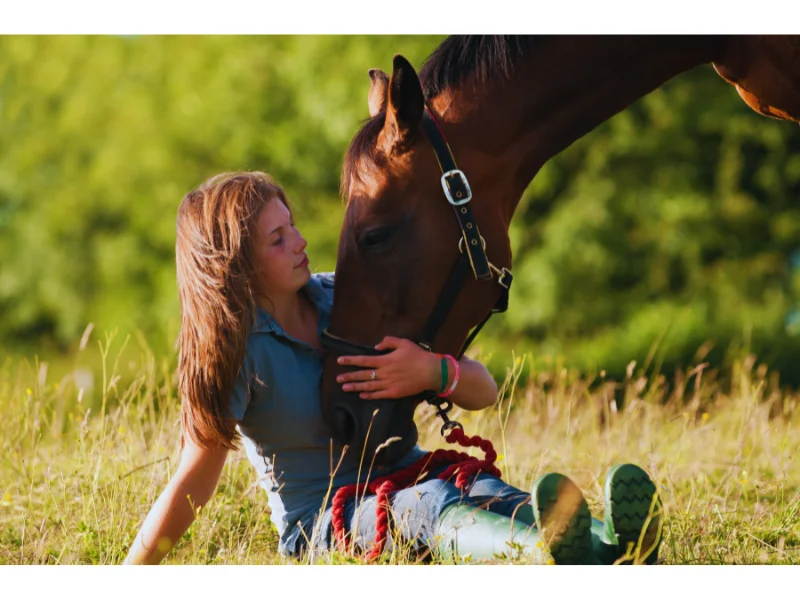
One of the most important aspects of facilitating emotional breakthroughs in equine coaching is ensuring that clients feel safe.
Horses naturally respond to a client’s emotional state, so it’s essential to create an environment where emotions can surface without judgment.
Ways to establish this include:
- Allowing the client to engage with the horse at their own pace.
- Encouraging deep breathing and mindfulness before interactions.
- Observing the client’s body language and emotional state.
- Letting the horse choose how and when to engage.
A trauma-informed approach is especially important when working with clients processing past emotional wounds.
Rushing the process can lead to resistance or discomfort, while patience and gentle guidance allow emotions to unfold naturally.
Using Nonverbal Communication to Deepen Awareness
Clients often experience emotional breakthroughs when they recognize how their emotions affect their interactions with the horse.
A study in the Journal of Extension about the psychological and physical benefits of interactions with horses found that individuals working with horses showed increased emotional awareness and improved stress management.
These improvements help clients handle and process emotions in a way that promotes healing.
Since horses do not respond to words but instead to energy and body language, clients must become fully present in the moment.
This makes equine-assisted coaching an effective tool for deepening self-awareness.
Some effective techniques include:
- Encouraging clients to observe how their emotions shift when engaging with the horse.
- Asking reflective questions after an interaction, such as, “What did you notice about the horse’s response?”
- Helping clients connect physical sensations to emotional experiences.
Overcoming Emotional Barriers in Equine-Assisted Coaching
Identifying Resistance and Emotional Blocks
Not all clients will experience immediate emotional breakthroughs.
Some may struggle with vulnerability, fear, or past trauma that makes it difficult to connect.
Equine coaching allows these emotional barriers to surface gently, giving clients an opportunity to address them in a safe and supportive space.
Common signs of emotional resistance include:
- Hesitation or avoidance when engaging with the horse.
- Difficulty maintaining presence or focus.
- Emotional numbness or disconnection.
Through patient facilitation, coaches can guide clients to explore these barriers at a pace that feels manageable.
Encouraging Emotional Release Through Equine Interactions
Emotional breakthroughs often happen when a client allows themselves to fully feel and express emotions they have been holding onto.
Horses provide a nonjudgmental presence that makes this process easier.
Methods for encouraging emotional release include:
- Allowing clients to stand in silence with the horse and notice their emotions.
- Using guided breathing exercises to help clients stay present.
- Encouraging physical movement, such as walking beside the horse, to process emotions.
These experiences help clients shift emotional patterns that may have been stuck for years, and gives them the chance to move forward with greater clarity and self-acceptance.
Find Clarity and Healing with Equine Guidance®
Equine Guidance®, located in Arizona’s Sedona Verde Valley, provides a supportive space for individuals to experience emotional breakthroughs through equine-assisted coaching.
Since 2004, it has offered a trauma-informed approach that helps clients process emotions, develop self-awareness, and find healing through their connection with horses.
Our sessions allow you and your clients to move at your own pace to create a safe and natural environment for emotional release.
With experienced facilitators guiding the process, Equine Guidance® provides a unique path for those seeking deeper emotional healing and self-discovery.
Visit or give us a call at Equine Guidance® to learn more about facilitating emotional breakthroughs in equine coaching.
