

Post-Traumatic Stress Disorder (PTSD) can leave deep, invisible wounds that are difficult to heal.
People living with PTSD often struggle with anxiety, depression, and stress that seem impossible to shake.
While traditional therapy offers valuable tools, some individuals find it challenging to reach deep enough to address their trauma fully.
This is where the unique bond between humans and horses comes into play.
Horses, with their innate sensitivity and ability to communicate nonverbally, offer profound therapeutic benefits, especially in helping to regulate the nervous system and ease the intense emotions associated with PTSD.
What Is PTSD?
According to the American Psychiatric Association, PTSD is a condition that can arise after experiencing or witnessing a traumatic event, characterized by ongoing stress, anxiety, and a range of other debilitating symptoms.
The brain and body can become trapped in a constant alert, making it incredibly challenging for those affected to find a sense of normalcy.
Traditional therapy methods, such as talk therapy, can provide relief for some.
However, others continue to struggle, signaling the need for alternative approaches.
The Roles of Horses in Healing
Horses possess an innate ability to connect with humans on a profound level, particularly when it comes to managing and alleviating the symptoms of PTSD.
Their involvement in therapy does not revolve around activities but rather focuses on the silent, powerful communication between horses and humans.
This section delves into the specific ways horses contribute to the therapeutic process.
Nonverbal Communication and Healing
One of the most powerful aspects of working with horses is the nonverbal communication.
Unlike humans, horses communicate primarily through body language and energy.
This form of communication can be incredibly healing for those with PTSD, as it allows them to engage in a therapeutic process without the need for words.
The horse’s responses are honest and immediate, providing instant feedback on the person’s emotional state.
This nonverbal interaction helps individuals become more aware of their body language and emotional energy.
Over time, this awareness can lead to greater self-regulation and emotional balance.
As the person learns to communicate more effectively with the horse, they also learn to manage their own emotions better, leading to a reduction in PTSD symptoms.
Co-Regulating the Nervous System
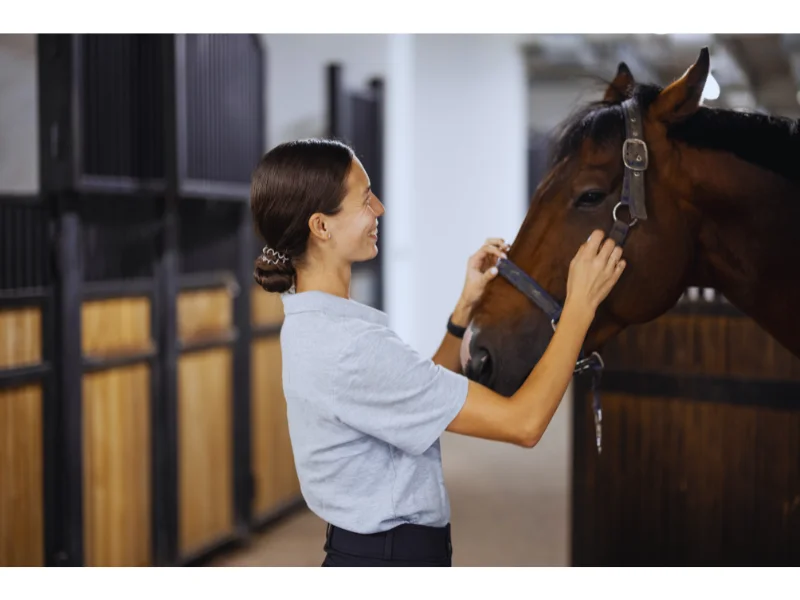
When a person with PTSD interacts with a horse, something remarkable happens: the nervous systems of the human and the horse begin to synchronize.
This process is known as co-regulation.
Horses have a natural ability to stay calm and grounded, which can help to soothe the dysregulated nervous system of someone with PTSD.
Through this right-brain-to-right-brain connection, the horse helps the person to shift out of a state of stress and into a state of calm.
The horse’s electromagnetic field also plays a role in this process.
Research has shown that the heart’s electromagnetic field is much stronger than that of the brain.
Horses, with their large hearts, emit a powerful electromagnetic field that can influence the human heart and nervous system.
When a person is near a horse, their electromagnetic field can begin to align with that of the horse, leading to a sense of calm and well-being.
Deactivating Stuck States of Stress
One of the most challenging aspects of PTSD is feeling stuck in a state of stress.
This can make it difficult to relax or feel safe, even in non-threatening situations fully.
Horses can help to deactivate these stuck states by offering a sense of presence and calm that is difficult to achieve on one’s own.
As the person spends time with the horse, their nervous system gradually learns to release the constant alertness and enter a more relaxed state.
This process doesn’t happen overnight, but with repeated interactions, individuals often find that they are better able to manage their stress and anxiety.
The horse serves as a guide, helping the person navigate their emotions and regain their balance.
The Power of Presence
Horses live in the present moment, free from the worries and anxieties that plague humans.
This ability to stay present can have a powerful effect on those with PTSD.
When someone with PTSD spends time with a horse, they are gently guided back to the present moment, where they can begin to reconnect with themselves and their surroundings.
This focus on the here and now is essential for healing, as it allows the person to break free from past trauma and start building a new, healthier relationship with their body and mind.
Building Trust and Connection

Trust is often a significant issue for those with PTSD.
Past trauma can make it difficult to trust others, including oneself.
With their gentle and nonjudgmental nature, horses offer a safe space for rebuilding trust.
The relationship between a horse and a person with PTSD is built on mutual respect and understanding.
As trust is established with the horse, it often extends to other areas of the person’s life, helping them rebuild relationships and regain confidence and self-worth.
Final Thoughts
Horses offer a unique and powerful path to healing for those living with PTSD.
Their ability to communicate nonverbally, regulate the nervous system, and help deactivate stuck states of stress makes them invaluable partners in the therapeutic process.
For those who have struggled to find relief through traditional therapy, working with horses can provide the breakthrough needed to move forward and begin healing.
This alternative approach to therapy doesn’t replace traditional methods but rather complements them, offering an additional tool for those seeking to regain balance and control over their lives.
By tapping into the wisdom and sensitivity of horses, individuals with PTSD can begin to find peace and reclaim their lives from the grip of trauma.
At Equine Guidance®, our compassionate equine partners await to support your nervous system in healing from life’s challenges, offering an opportunity for profound self-awareness and liberation.
Learn how Belle Shook and her herd of Bashkir Curly horses can guide you to personal growth, clarity after trauma, and spiritual interconnectedness.
Equine Guidance® offers various therapies tailored to foster emotional balance and resilience. We invite you to explore our services and begin the path to self-mastery and happiness.
Visit us at Equine Guidance to learn more, and contact us to schedule your life-changing equine therapy session in the serene Sedona Verde Valley.
